
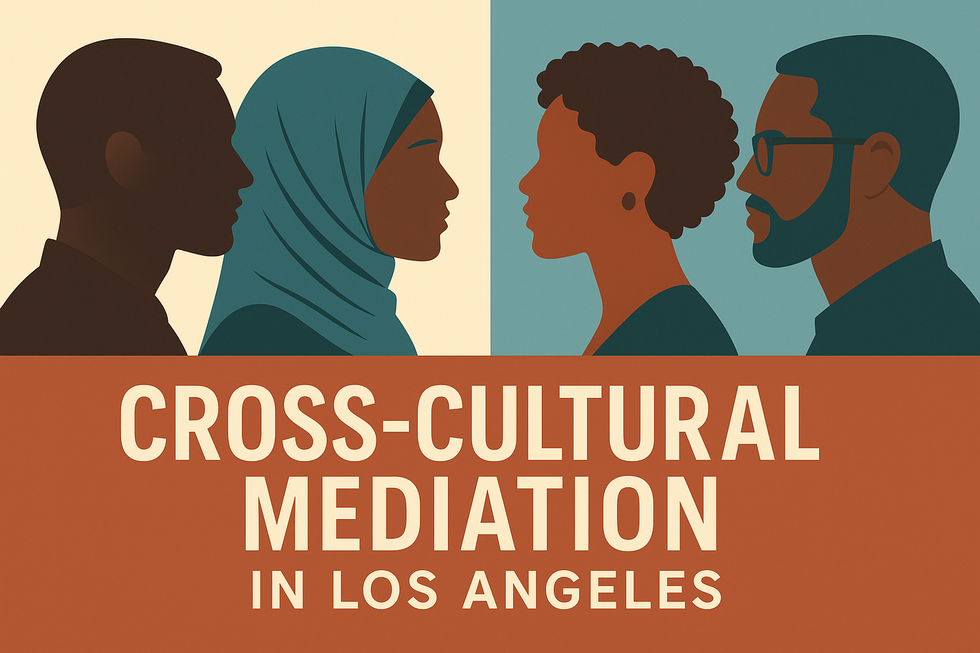
In Los Angeles, Spanish is spoken in homes, businesses, and neighborhoods across every corner of the city—from East L.A. and Boyle Heights to Downey, Pico Rivera, and beyond. Yet anyone who has worked closely with the Hispanic community knows that being bilingual is not enough.
A truly effective Spanish-speaking mediator must also be culturally fluent—someone who doesn't just translate words but understands the cultural context behind them. Because in mediation, subtle misunderstandings can change the tone of an entire negotiation.
This is especially true in Southern California, where the Spanish-speaking population reflects an extraordinary mix of origins—Mexico, Guatemala, El Salvador, Colombia, Peru, Cuba, Puerto Rico, Argentina, and others. Each brings its own way of communicating, sense of respect, family dynamics, and even humor.
Beyond Language: The Power of Cultural Fluency
When people hear the term “Spanish-speaking mediator,” they often think of someone who can translate between English and Spanish. But mediation is not translation—it's facilitation. It's about helping people communicate what they really mean, in ways that others can hear and understand.
Cultural fluency means knowing that:
-
A pause or silence might mean respect in one culture but disagreement in another.
-
Direct eye contact might show honesty in one country but be seen as disrespectful in another.
-
The term “compromise” can sound positive in English but may suggest weakness or loss in some Spanish-speaking cultures.
These nuances matter. A mediator who understands them can build bridges where others see barriers.
Why Cultural Understanding Changes Outcomes
Mediation depends on trust. If one party feels misunderstood—linguistically or culturally—they often shut down, disengage, or react defensively. That's when cases spiral into unnecessary litigation.
But when people feel that the mediator “gets” them—not only their words, but their values and worldview—they are far more likely to listen, open up, and reach common ground.
Cultural fluency helps the mediator:
-
De-escalate emotional misunderstandings before they grow into full conflict.
-
Interpret tone and context accurately, not just the literal words spoken.
-
Create a sense of fairness and neutrality that resonates across cultural lines.
Los Angeles: A Mosaic of Spanish-Speaking Communities
Los Angeles is home to one of the most culturally diverse Spanish-speaking populations in the United States. Here, “Spanish” isn't a single dialect—it's dozens of regional flavors.
Mexican Spanish, for example, often includes idioms and expressions rooted in indigenous words or everyday slang. Salvadoran Spanish may be warmer and softer in tone, while Cuban or Puerto Rican Spanish tends to be more rhythmic and fast-paced.
Each community has its own customs regarding negotiation and communication:
-
Mexican and Central American clients may prefer a more formal introduction before discussing disputes.
-
Caribbean and South American clients might expect an expressive, conversational style with warmth and storytelling.
-
Immigrant families often prioritize maintaining harmony and respect for elders, even in high-conflict situations.
Recognizing and adapting to these differences gives the mediator a unique edge in building rapport and resolving disputes efficiently.
Steve Lopez: Bridging Cultures, Building Understanding
Steve Lopez, founder of SoCal Mediation Center, was born and raised in Southern California. Fluent in Spanish since childhood, Steve grew up working alongside his father in family-owned businesses that served the local Hispanic community.
From a young age, he was exposed to the diverse tapestry of Spanish-speaking cultures that define Los Angeles. Whether interacting with families from Mexico, Guatemala, El Salvador, or Colombia, he learned not only the language but also the rhythms, humor, and respect codes that shape communication within each culture.
As a licensed attorney and professional mediator with over two decades of experience in civil, real estate, family law, and probate disputes, Steve combines legal expertise with deep cultural empathy. His bilingual fluency and lived experience allow him to create a comfortable environment where all parties feel heard and respected.
Why This Matters in Mediation
When mediation involves Spanish-speaking parties—especially when one side speaks primarily English and the other primarily Spanish—having a culturally fluent mediator can mean the difference between a resolution and a stalemate.
A mediator who understands these cross-cultural layers can:
-
Prevent miscommunication that leads to resentment or mistrust.
-
Help participants express feelings and needs authentically, without fear of being misunderstood.
-
Translate not only language, but intention and emotion.
Mediation is about human connection. When cultural and linguistic barriers are removed, the process becomes faster, more respectful, and more successful.
Why SoCal Mediation Center Stands Out
At SoCal Mediation Center, we don't just advertise bilingual services—we embody cultural fluency. Our mediations reflect the cultural richness of Los Angeles. Whether your case involves a business dispute, real estate matter, probate issue, or family conflict, you'll work with someone who speaks your language and understands your values.
Our goal is not only to settle cases but to help people move forward with dignity and understanding.
Frequently Asked Questions (Q&A)
Q: What's the difference between a bilingual mediator and a culturally fluent mediator?
A: A bilingual mediator can communicate in two languages. A culturally fluent mediator understands the deeper meanings, customs, and values that shape how each culture communicates. Both are valuable—but together, they create the best results.
Q: Why is cultural fluency important in Los Angeles mediations?
A: Los Angeles has one of the most diverse Spanish-speaking populations in the U.S. A mediator familiar with Mexican, Central American, South American, and Caribbean communication styles can navigate differences smoothly and prevent misunderstandings.
Q: Can cultural misunderstandings really affect mediation outcomes?
A: Absolutely. Tone, phrasing, and nonverbal cues can shift the perception of fairness. A culturally fluent mediator ensures everyone's meaning is accurately conveyed and respected.
Q: How can I find a Spanish-speaking mediator in Los Angeles?
A: Look for mediators who not only list “bilingual” on their profile but also describe experience working with Hispanic or Latino communities. At SoCal Mediation Center, we make cultural fluency a cornerstone of our practice.
Q: What types of cases does SoCal Mediation Center handle?
A: We handle real estate, business, probate, family, and HOA-related disputes throughout Southern California, in both English and Spanish.
See Also:
Cross-Cultural Mediation in Los Angeles: Bridging Differences with Respect
Comments
There are no comments for this post. Be the first and Add your Comment below.
Leave a Comment